- Home
- Programme
- Registration
- Practical Guide
- About Neuronus
Netherlands Institute for Neuroscience
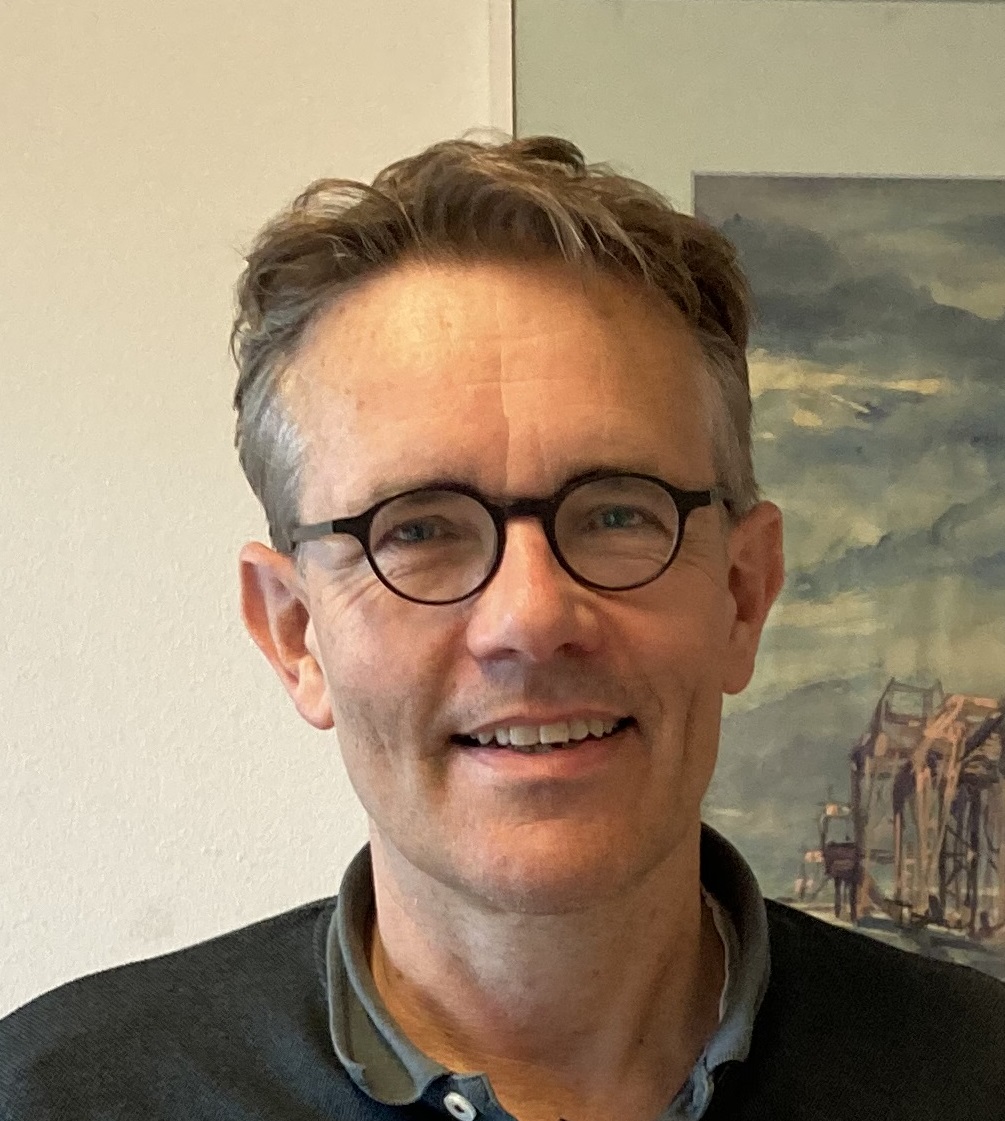
Pieter R. Roelfsema received his MD in 1991 and his PhD in 1995. Since 2002 he has worked at the Netherlands Institute for Neuroscience in Amsterdam, where he served as director from 2007 to 2023. He is a Professor at theVrije Universiteit Amsterdam and at the Department of Neurosurgery of the Amsterdam University Medical Center, as well as being affiliated with the Institut de la Vision in Paris. He has been awarded the NWO-VICI grant (2008) and two ERC Advanced Grants (2014, 2022).
His research focuses on visual perception, plasticity, memory, and consciousness, studied in experimental animals, humans, and neural networks. He investigates how neurons across brain areas cooperate during seeing and thinking, and how networks reconfigure themselves during learning. Professor Roelfsema also develops neurotechnology for visual prostheses, aiming to restore rudimentary vision in blind individuals. He coordinates the Dutch neurotechnology initiative NeuroTech-NL and in 2019 co-founded Phosphoenix, a start-up developing visual brain prostheses.
Talk: "Concious Vision and Its Restoration in Blindness"
I will discuss the neural mechanisms that determine whether visual stimuli reach conscious awareness. For simple stimuli, early visual cortex mainly relays information to higher areas; once above threshold, these signals can be maintained in working memory. More complex perceptual task that require figure-ground segregation or shifts of attention depend on recurrent interactions between early visual areas and higher areas.
Understanding these mechanisms also guides strategies to restore vision when the eyes fail. A key goal is to project visual information directly onto the brain, bypassing damaged pathways. Electrical stimulation of visual cortex can evoke artificial percepts (phosphenes), even after long-term blindness. We are developing a cortical brain prosthesis with high-channel-count interfaces. By stimulating up to 1,000 electrodes, patterned activity can generate interpretable percepts, analogous to pixels forming an image.