
- Home
- Programme
- Registration
- Practical Guide
- About Neuronus
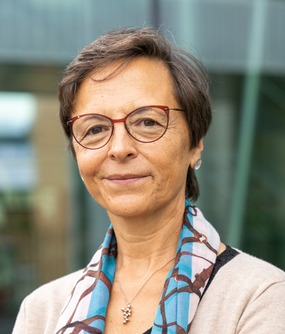
EPFL, Switzerland
Carmen Sandi is a Professor at the Swiss Federal Institute of Technology Lausanne (EPFL), where she leads the Laboratory of Behavioral Genetics. She has made seminal contributions to understanding how stress affects brain function and behavior, identifying key modulators of stress-induced neural and behavioral adaptations. Her current research focuses on how metabolism shapes the structure and function of neural circuits involved in emotion regulation, motivation, and decision-making. Using integrative approaches in rodents and humans, her work has revealed how mitochondrial processes contribute to individual differences in behavior and vulnerability to psychiatric disorders, including anxiety and depression.
Carmen carried out her PhD at the Cajal Institute in Madrid, followed by postdoctoral training at the University of Bordeaux and the UK Open University, and held an Associate Professor position at UNED University in Madrid before joining EPFL. Carmen has published over 280 research articles and contributed to several books. She has received major international distinctions, including the Ron de Kloet Prize for Stress Research, the John Paul Scott Award for Research on Aggression, and the European College of Neuropsychopharmacology (ECNP) Award. She has held major leadership roles in the neuroscience community, including serving as Director of the EPFL Brain Mind Institute, and as President of the Federation of European Neuroscience Societies (FENS), the European Brain and Behaviour Society (EBBS), and the Cajal Advanced Neuroscience Training Programme. She is the founder and co-President of the Swiss Stress Network and the Global Stress and Resilience Network, and also founded the ALBA Network for Diversity and Inclusion in Brain Sciences.
Carmen Sandi has been awarded the 2025 ECNP Neuropsychopharmacology Award (preclinical) in recognition of her achievements in advancing the understanding of the neurobiological mechanisms of stress and anxiety and their impacts on brain and behaviour.
Talk: ”Mitochondria in Brain Function and Mental Health”
Mitochondria are emerging as important determinants of brain function and mental health. I will discuss evidence that mitochondrial properties in defined brain cell types and circuits contribute to anxiety, motivation, and stress responsiveness. Focusing on the nucleus accumbens and related mesolimbic and prefrontal networks, I will present work showing that alterations in mitochondrial dynamics and bioenergetics in specific neuronal populations are associated with coordinated changes in transcriptional programs, neuronal structure, circuit engagement, and behavior. Using phenotype-led approaches, cell-type-specific manipulations, single-nucleus transcriptomics, and circuit-level analyses, I will illustrate how mitochondrial mechanisms can be identified from both naturally occurring and experimentally induced behavioral variability. I will also discuss emerging findings extending this framework beyond neurons, including evidence that astrocytic mitochondria influence blood-brain barrier properties with behavioral consequences, and that microglial mitochondrial signatures are associated with anxiety-related phenotypes. Together, these data support the view that mitochondria participate in the regulation of core behavioral dimensions rather than representing a secondary correlate of altered brain states. I will further consider how this work informs current efforts to understand vulnerability and resilience to stress, and how it may help define biologically grounded entry points for intervention in mental health conditions, particularly those involving anxiety, motivational dysfunction, and depression.